How to Build a Multi-Tenant SaaS Application
Building a SaaS application is not just about creating features and allowing users to sign up. If you want to serve multiple businesses through one platform, you also need an architecture that keeps their data separate, manages permissions correctly, and scales as your customer base grows.
This is where multi-tenant SaaS architecture becomes important.
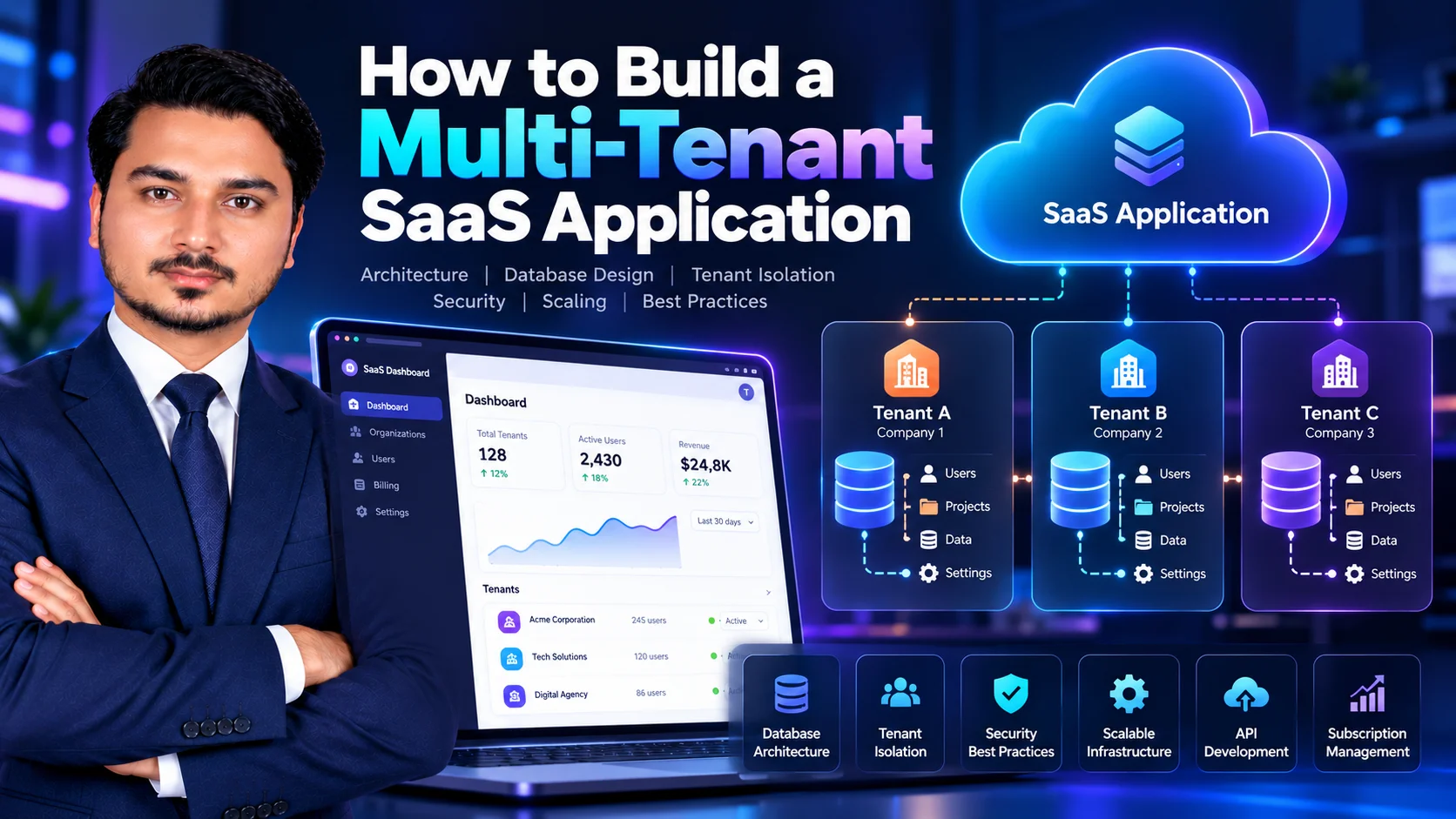
A multi-tenant application allows multiple customers, known as tenants, to use the same software while keeping their data and configurations isolated. This approach can simplify maintenance, reduce infrastructure duplication, and make it easier to deliver updates to every customer.
In this guide, we'll explore the essential steps to build a secure, scalable multi-tenant SaaS application.
What Is a Multi-Tenant SaaS Application?
A multi-tenant SaaS application is software that serves multiple customers through a shared application infrastructure. Each tenant may represent a company, organization, team, or individual customer.
For example, a project management platform might serve hundreds of companies. Every company can manage its own users, projects, tasks, and settings without accessing another company's information.
The application code can be shared, but tenant-specific data and permissions must remain properly separated.
1. Choose the Right Multi-Tenant Architecture
Your first major decision is how to store and separate tenant data. There are three common approaches.
Shared database and shared tables: All tenants use the same database tables, and each tenant's records include a tenant_id. This approach is cost-effective and relatively simple to operate, but every query must enforce tenant boundaries.
Separate schema per tenant: Tenants share a database server but have separate schemas. This provides stronger organizational separation, although migrations and schema management become more complicated.
Separate database per tenant: Each tenant has its own database. This provides greater isolation and can support specific compliance or customization requirements, but infrastructure and maintenance costs are typically higher.
For many early-stage SaaS products, shared tables with strict tenant isolation can be a practical starting point. Applications with demanding security, compliance, or customer-specific requirements may benefit from a different model.
2. Design Your Database Around Tenants
A reliable database design should make tenant ownership explicit.
For example, a basic structure might include:
tenants— customer organizationsusers— user accountsmemberships— relationships between users and tenantsprojects— tenant-owned projectssubscriptions— billing plans and subscription status
Database constraints and carefully designed relationships can provide additional protection against records being associated with the wrong tenant.
3. Implement Authentication and Authorization
Authentication confirms who a user is. Authorization determines what that user can access.
In a multi-tenant application, you need both.
A user may belong to one organization or several organizations, with different roles in each. For example, an organization owner may manage billing and invite users, while a regular member can only access assigned projects.
A secure request flow should:
- Authenticate the user.
- Determine which tenant they are authorized to access.
- Check their role and permissions.
- Apply tenant restrictions to database operations.
- Return only authorized data.
4. Build Tenant Isolation Into the Application
Tenant isolation is one of the most important security requirements in multi-tenant SaaS development.
A single missing filter can expose one customer's data to another customer.
To reduce this risk, centralize tenant-aware data access, use authorization middleware, and consider database-level protections such as row-level security where supported.
You should also test attempts to access another tenant's records by changing resource IDs, API parameters, URLs, or request payloads.
Tenant isolation must cover more than the main database. Files, background jobs, cached responses, search indexes, analytics, exports, and logs can also contain tenant-specific information.
5. Design a Scalable API and Backend
Your API should consistently enforce tenant context and permissions. Avoid duplicating authorization logic across dozens of endpoints.
For larger applications, separate responsibilities into clear modules, such as:
- User and organization management
- Projects and business data
- Billing and subscriptions
- Notifications
- File storage
- Reporting and analytics
If your SaaS product needs to connect with external platforms, well-designed APIs also make integrations easier to manage. Explore our API Integration Services for related development capabilities.
6. Add Subscription and Tenant Management
Most commercial SaaS applications need a way to manage plans and customer organizations.
Your tenant management system may include:
- Organization creation and invitations
- Subscription plans
- Usage limits
- Billing status
- Feature access
- User seats
- Account suspension
- Tenant settings
Billing events should be handled reliably, with appropriate verification and safeguards against duplicate processing.
7. Plan for Performance and Scaling
A shared architecture can be efficient, but one large tenant may consume a disproportionate amount of resources.
Monitor database performance, slow queries, API response times, storage usage, and tenant-specific workloads.
Useful techniques include:
- Indexing tenant identifiers
- Pagination for large result sets
- Caching with tenant-aware cache keys
- Background jobs for heavy tasks
- Rate limiting
- Database connection management
- Horizontal scaling when necessary
Our Custom Web Application Development service covers the broader application architecture and development work involved in building custom software.
8. Test Security Before Launch
Before releasing your SaaS application, test both normal usage and cross-tenant access attempts.
Your test suite should verify that users cannot view, modify, delete, export, or download another tenant's resources without explicit authorization.
Also test organization switching, invitations, role changes, subscription limits, file permissions, and background processing.
Automated tests should cover tenant boundaries across every important data model and API endpoint. Security testing should continue as the application evolves.
Common Mistakes to Avoid
Some frequent mistakes in multi-tenant SaaS development include:
- Trusting tenant IDs submitted by the client
- Forgetting tenant filters in database queries
- Using cache keys that are not tenant-specific
- Checking permissions only in the frontend
- Allowing background jobs to run without tenant context
- Failing to test cross-tenant access
- Choosing an unnecessarily complex architecture too early
Final Thoughts
Building a multi-tenant SaaS application requires more than sharing one codebase among multiple customers. You need a clear tenant model, a suitable database architecture, server-side authorization, reliable tenant isolation, and infrastructure that can grow with demand.
For many new products, a shared database with carefully enforced tenant boundaries can provide a practical starting point. However, the right design depends on your security requirements, customer expectations, compliance obligations, and growth plans.
If you're planning a new SaaS product, invest in tenant isolation and authorization from the beginning. A well-designed foundation makes it easier to add features, onboard customers, and scale the application without compromising security.
Learn more about our SaaS Application Development and Custom Web Application Development services, or book a consultation to discuss your project requirements.
Frequently Asked Questions
What is multi-tenant SaaS architecture?
It is an architecture in which multiple customers share an application and underlying infrastructure while their data and permissions remain logically or physically isolated.
Which database architecture is best for multi-tenant SaaS?
Shared tables can work well for many applications, while separate schemas or databases may be more appropriate for stricter isolation or customer-specific requirements. The decision depends on cost, security, compliance, and operational complexity.
How do you secure a multi-tenant application?
Enforce server-side authorization, validate tenant membership, apply tenant-aware data access, protect files and caches, and test that users cannot access another tenant's resources.
Can a multi-tenant SaaS application scale?
Yes. With appropriate database indexing, caching, workload management, monitoring, and infrastructure design, a multi-tenant application can scale as customer demand grows.